PyCon DE & PyData 2026 Thought the Eyes of a First Time Attendee
Published on April 21, 2026.

The 2026 edition of the German Python Conference, also known as PyCon DE & PyData 2026, took place in Darmstad near Frankfurt on 14-16 April 2026. This was my first time attending PyCon DE and I felt very welcome. In this post, I share a couple of highlights of my days at PyCon DE 2026.
1st Day
The conference started with a vibrant welcome by Alexander CS Hendorf. From the opening speech, I love the emphasis that Alexander gave to the spirit of community: “when things change fast, people who help each other have the advantage” and “we are a community that gets things done”.
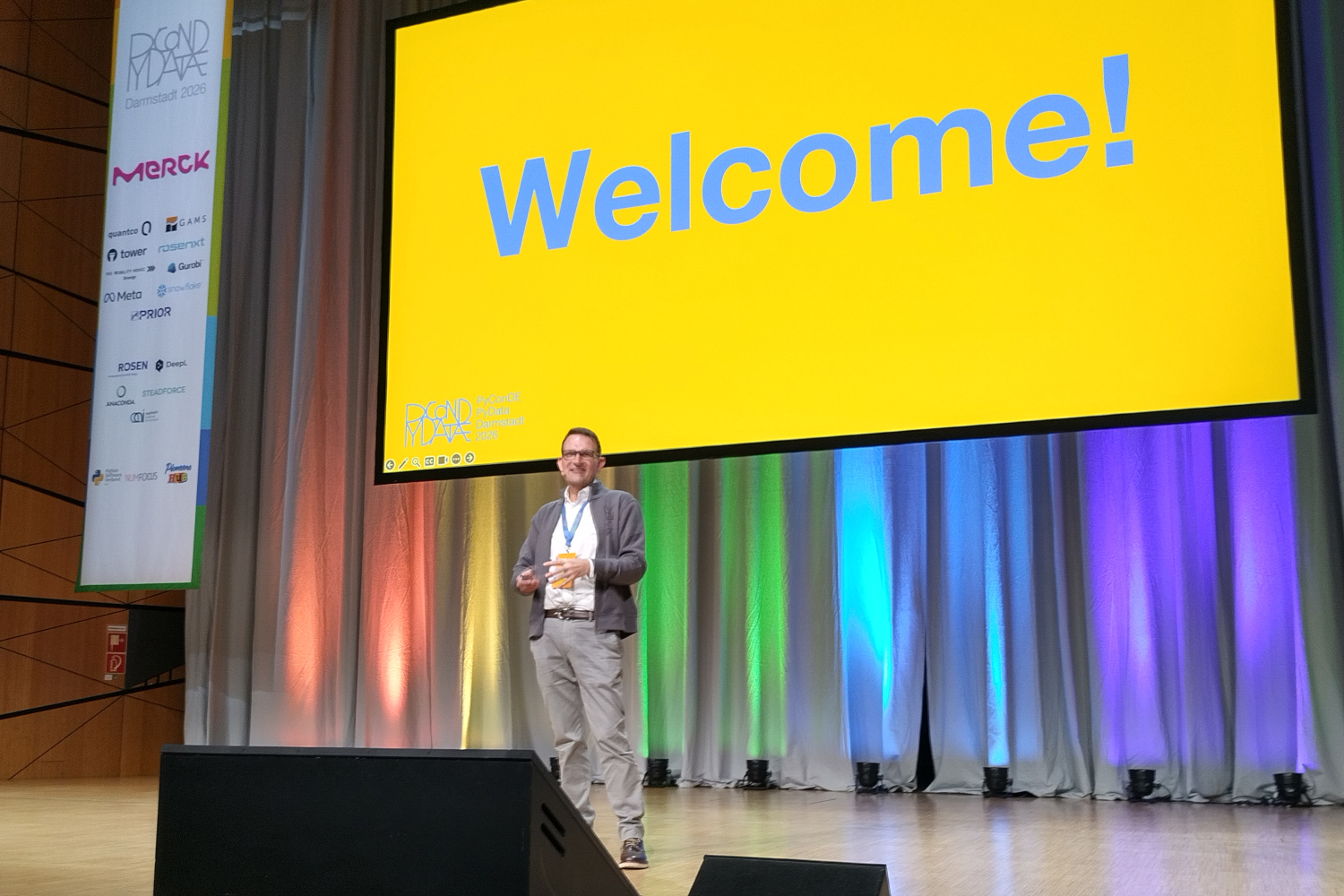
The opening session was followed by the first keynote of the conference. Sebastian Raschka, author of the beautiful LLM Architecture Gallery, talked about the way that he studied the architecture details of large language models (LLMs). The keynote is a must to anyone that is interested in the details of the layers that built the deep neural network behind the LLMs.
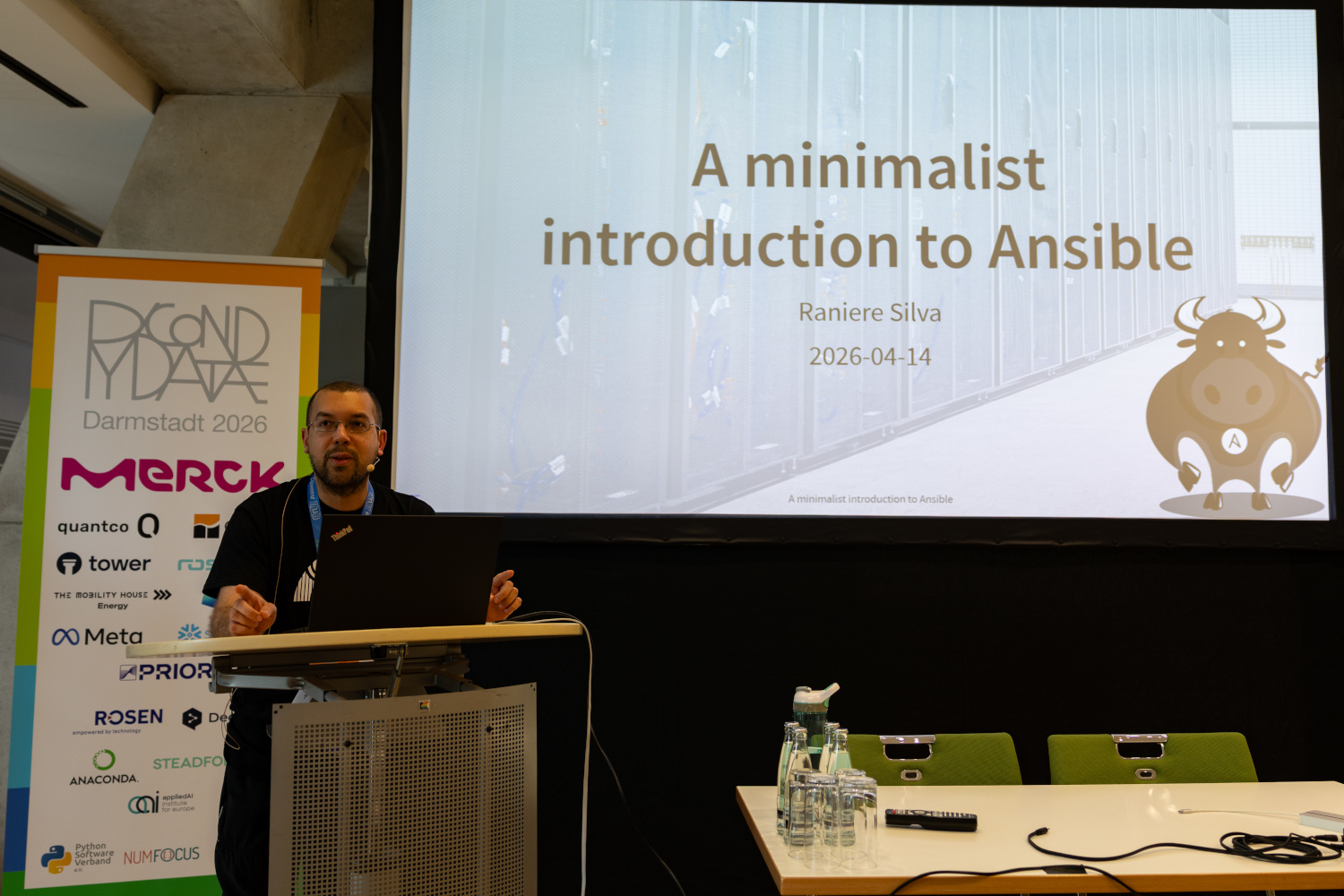
My contribution to the conference programme, an introduction to Ansible in the format of a tutorial (slides published on GitHub), also took place on the first day and was attended by a small crowd. Ansible is an open source Python package used not only to configure the state of a server but also to the provision of servers from cloud providers and orchestration of application deployment. One of the key advantages of Ansible is that no knowledge of Python is required because the steps are organised using YAML files.
The first day also included the talk “Pair & Share: How formal Mentoring pushed REWE Analytics to a new level” by Axel Buddendiek. I would love to see more discussions on the topic of mentoring in RSE related events, specially discussions towards the answer for “how to run a mentoring programme when I’m leading a small team”, “how to find mentoring when I’m a team of one developer”, and “how mentoring improves the health of my team”.
2nd Day
The second day was the day that I was most anticipating because it included all the talks in the conference related with WebAssembly (Wasm): “State of In-Browser ML: WebAssembly, WebGPU, and the Modern Stack” and “Build a web coding platform with Python, run in WebAssembly”.
The first talk, “State of In-Browser ML”, was presented by Oleh Kostromin and Iryna Kondrashchenko. It included a great summary of the options to run LLms locally from the web browser, for example ONNX models with WebGPU (that is partially supported by the latest web browsers). The talk was amazing but no silver bullet was provided.
The second talk, “Build a web coding platform with Python”, was presented by Maris Nieuwenhuis and covers his bachelor’s final project. It is a great start for a future competitor to learnr (the R package that turns any R Markdown document into an interactive tutorial). And my suggestion is to build future versions of the web coding platform as a Jupyter extension.
The last talk that I attended on the second day was “Heat: scaling the Python scientific stack to HPC systems” by Claudia Comito and Thomas Saupe. I’m not a HPC user but I will recommend readers that are HPC users to check the Helmholtz Analytics Toolkit (Heat) given the performance gain reported in the talk.
3rd Day
The last day of PyCon DE started with the keynote “A View of Sovereignty from The Cloud” by Aaron Glenn that aligns with recent news that France is adopting Linux, that Germany is adopting LibreOffice, and the launch of the Euro-Office project. It was my favourite keynote of the conference because he said “very, very few of you need [hyperscalers like AWS services]”. Aaron also briefly promoted the use of Ansible, which I covered in a tutorial on the first day.
The talk “Making Tech Tutorials Accessible: Practical Techniques for Educators” by Tamara Badikyan was amazing. Tamara shared her experience creating video tutorials targeting users with hearing impairment. Tamara also shared “Barrieria – The Game about digital Accessibility” that is a great resource for people coming to digital accessibility conversation for the first time.
Last Remarks
The organisation of the lightning talks was probably the best that I ever saw. The introduction of a “secret mission” similar to the party game “Don’t Get Got!” added extra fun to the lightning talk speakers and the commentators “from the future” filled the gap between each lightning talk setup.
I highly recommend readers to plan and attend the 2027 edition of PyCon DE that will be hosted in Heidelberg, Germany in the middle of April.
Tags: